

In Nashville, TN, a fireplace often becomes the center of attention during colder months, bringing family members together in living rooms and gathering spaces. However, an outdated brick surround, worn tile, or mismatched finish can make an otherwise attractive interior feel unfinished. Professional Tile Installation offers Nashville homeowners an opportunity to transform an existing fireplace into a striking architectural feature while complementing the home’s trim, flooring, and overall design.
Middle Tennessee homes feature a range of interior styles, from traditional brick fireplaces and classic wood mantels to modern living spaces with clean lines and neutral finishes. Choosing the right tile can help connect these architectural elements and create a more cohesive appearance. However, successful fireplace tile work requires more than selecting an attractive pattern. The installer must consider the fireplace type, surface preparation, tile dimensions, heat exposure, and transitions around the firebox.
AHS Trim & Finish provides additional finish services, including tile, paint, drywall, flooring, and exterior carpentry, when integrated into a broader project. Its primary focus on finish carpentry makes it a potential fit for homeowners coordinating fireplace tile with custom trim, mantels, and other architectural details.
Why Custom Tile Installation Improves Nashville Fireplace Surrounds
A fireplace naturally draws attention, which means imperfections around its surround can be particularly noticeable. Uneven grout lines, outdated materials, damaged tile, and poorly coordinated trim can make the entire wall look dated.
Custom tile installation allows homeowners to select materials, patterns, and layouts that suit their interiors. Rather than treating the fireplace as an isolated feature, a coordinated design can connect it with surrounding walls, built-in cabinetry, flooring, and decorative millwork.
For example, a traditional Nashville home may benefit from natural stone-look porcelain tile paired with a carefully proportioned mantel. A contemporary interior might look better with large-format porcelain and minimal grout lines. A more decorative space could use patterned ceramic tile to introduce texture and contrast.
The key is choosing a design that complements the home’s existing architecture rather than competing with it. A professional installer can evaluate the dimensions of the fireplace wall and help plan tile placement around corners, edges, and the firebox opening.
Choosing the Best Tile for a Fireplace Surround
The right tile depends on the desired appearance, the fireplace’s construction, and the manufacturer’s heat-exposure requirements. Not every decorative tile is suitable for every fireplace location, so material selection should be part of the installation plan.
Porcelain Tile for a Modern Fireplace
Porcelain tile is popular for contemporary interiors because it comes in a wide range of colors, patterns, and sizes. Some products reproduce the appearance of marble, limestone, or other natural materials while offering relatively low maintenance.
Large-format porcelain can create a streamlined look with fewer grout joints. However, large tiles require careful layout planning and a suitable substrate to prevent uneven edges or visible lippage.
Before installation, the product must be checked for suitability around the specific fireplace and its expected temperatures.
Ceramic Tile for Decorative Designs
Ceramic tile offers numerous colors, textures, shapes, and patterns. It can work well for homeowners seeking a traditional, transitional, or more expressive fireplace design.
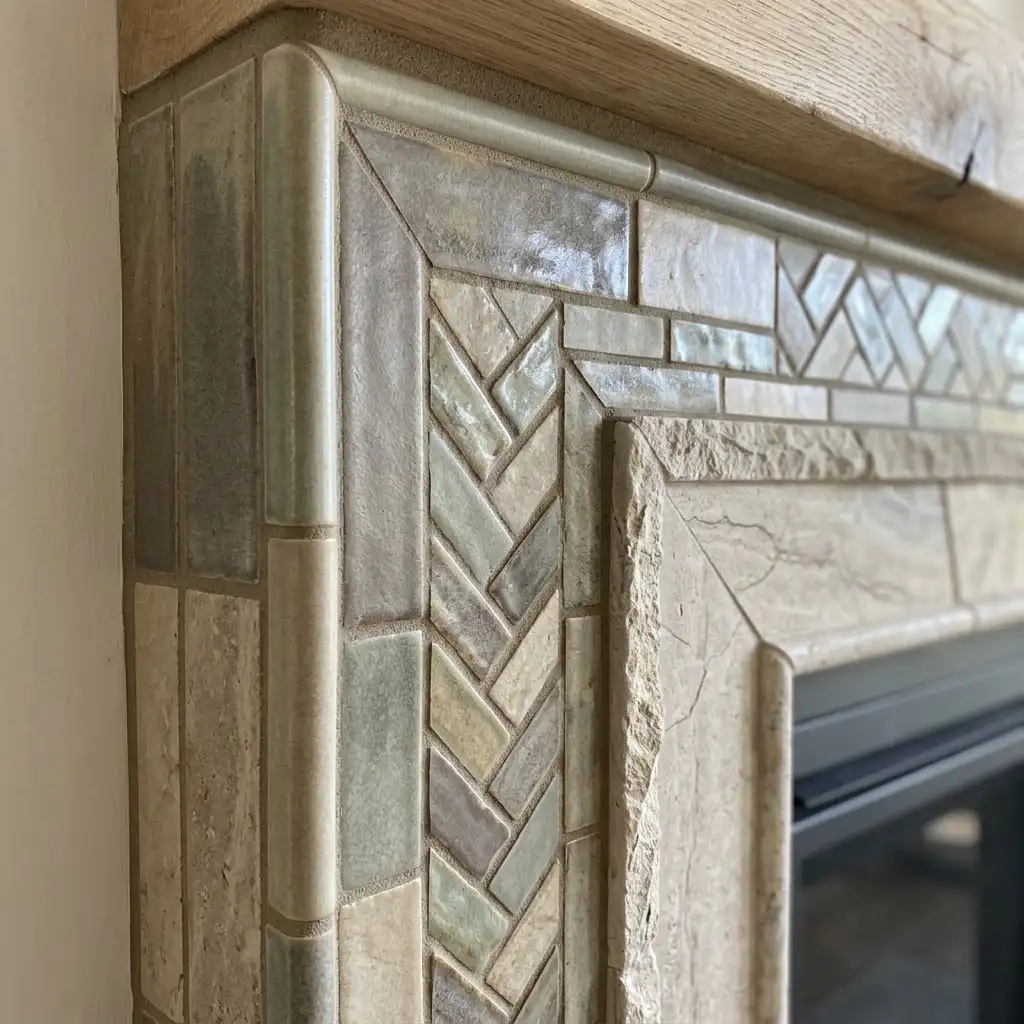
Subway tile, geometric patterns, and decorative accents can create visual interest without requiring an elaborate mantel. The installer must still verify that the chosen tile and its installation system are appropriate for the intended location.
Natural Stone for a Timeless Appearance
Natural stone can provide distinctive variation in color and texture, making each fireplace surround visually unique. Marble-look finishes, slate, and other stone options can complement both traditional and contemporary Nashville interiors.
Natural stone may require additional care, depending on its composition and finish. Porosity, staining susceptibility, weight, and sealing requirements should be considered before selecting a material.
Regardless of the tile type, the complete assembly matters. The substrate, mortar, grout, clearances, and installation method must all be suitable for the fireplace’s design and operating conditions.
Planning a Fireplace Tile Design That Fits Your Home
A successful fireplace surround starts with measurements and a clear design plan. The goal is to create a finished feature that looks balanced, fits the existing structure, and works with the rest of the room.
Consider the Fireplace’s Proportions
A narrow surround may look overwhelmed by oversized tiles, while a large fireplace wall can accommodate a more expansive pattern. Tile placement should account for the width and height of the opening, the mantel dimensions, and the surrounding wall.
Planning the layout in advance helps reduce awkward cuts and narrow tile strips near the edges. It also allows the installer to position prominent patterns or veining where they will have the greatest visual impact.
Coordinate Tile With Trim and Millwork
Tile and finish carpentry often work together on fireplace projects. A custom mantel, decorative molding, wall paneling, or built-in shelving can frame the tiled area and make the entire wall feel intentional.
AHS Trim & Finish specializes in custom fireplace surround upgrades involving mantels, trim, millwork, paneling, and built-in elements. Its approach emphasizes proper proportions, carefully fitted joints, and integration with the home’s existing architectural details.
When tile is part of the same renovation, homeowners should coordinate the tile layout and carpentry design before installation begins. This helps ensure that edges, transitions, and surrounding features fit together cleanly.
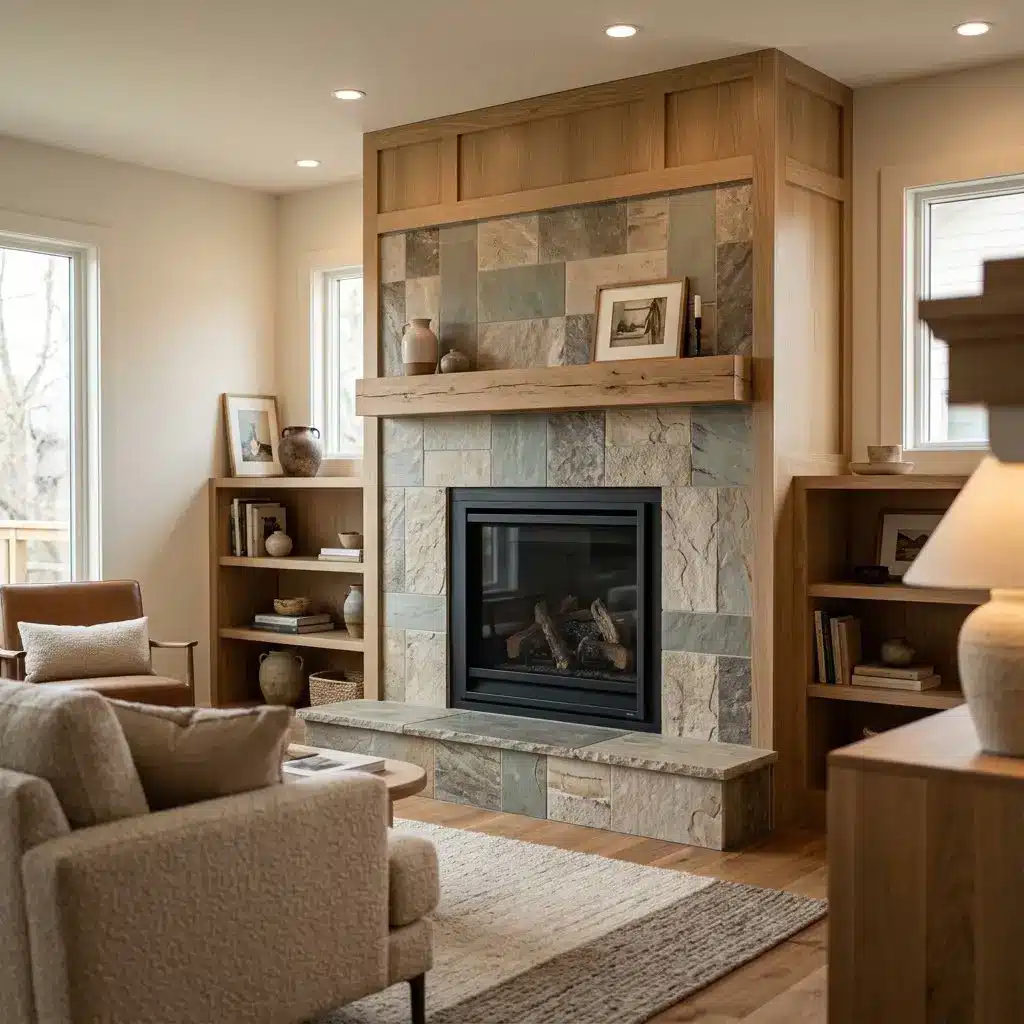
Why Professional Fireplace Tile Installation Matters
Fireplace surrounds are highly visible, and mistakes can be difficult to conceal after the work is complete. Uneven tile, inconsistent grout joints, poorly finished edges, or an unsuitable installation system can compromise both appearance and performance.
Professional installation begins with evaluating the existing surface. The substrate must be sound, stable, and appropriate for the selected tile and fireplace conditions. Damaged materials or an unsuitable existing finish may need to be removed or corrected before installation.
The installer then plans the tile layout, selects compatible setting materials, and carefully positions each tile. Consistent spacing, level surfaces, and clean transitions are essential for a polished finish.
Heat safety is another important consideration. A wood-burning fireplace, gas fireplace, and decorative electric unit may have different installation requirements. Required clearances around the firebox must be maintained, and the selected tile, mortar, grout, and backing materials must be suitable for the application. Tile itself does not automatically make an improperly constructed fireplace safe.
For Nashville homeowners, professional coordination is especially valuable when a tile upgrade forms part of a larger interior renovation involving new flooring, drywall, cabinetry, or custom millwork.
A Nashville Fireplace Transformation
Consider a Nashville homeowner whose living room has recently received new flooring and updated wall colors. The original fireplace surround, however, still features dated tile that clashes with the refreshed interior.
Rather than renovating the entire room again, the homeowner decides to update the fireplace with a neutral porcelain tile and a custom mantel that complements the existing trim.
A professional evaluates the fireplace, confirms the appropriate installation requirements, measures the surround, and plans the tile layout. The carpentry and tile work are coordinated so the new mantel and surrounding finishes align cleanly.
Once the project is complete, the fireplace becomes a more cohesive focal point that connects the updated room’s finishes.
This is an illustrative scenario, not a verified customer project. It demonstrates how coordinated tile installation and finish carpentry can improve a room without requiring a complete interior reconstruction.
How to Maintain Your Tiled Fireplace Surround
Once the installation is complete, routine care helps preserve the appearance of the tile and grout.
Use cleaning products appropriate for the selected material. Glazed porcelain and ceramic tile generally require different care from some natural stones, which may be sensitive to acidic cleaners or other chemicals.
Avoid abrasive tools that can scratch delicate finishes. Inspect grout joints and perimeter sealant periodically for cracks, gaps, or deterioration, particularly around areas exposed to changing temperatures.
If tiles become loose or grout begins breaking away, arrange an inspection to determine the cause. Movement, substrate problems, moisture, or unsuitable installation materials may need to be addressed before replacing the affected section.
For fireplace projects, maintenance instructions should also reflect the manufacturer’s recommendations for the tile and the fireplace itself.
Frequently Asked Questions
What is the best tile for a fireplace surround?
Porcelain, ceramic, and natural stone may all be suitable, depending on the fireplace design and product specifications. Choose materials rated for the intended application and follow the fireplace manufacturer’s clearance requirements.
Can I install new tile over an existing fireplace surround?
Sometimes. The existing surface must be stable, properly bonded, and compatible with the new installation system. Loose, damaged, or unsuitable materials may need to be removed first.
Can tile be combined with a custom wood mantel?
Yes. Tile and custom millwork can complement one another when the design, dimensions, and installation sequence are coordinated. All required clearances from the fireplace opening and heat-producing components must be maintained.
How long does fireplace tile installation take?
The timeline depends on the surround’s size, the tile pattern, surface preparation, material availability, and whether trim or mantel work is included. Your contractor should provide a project-specific schedule after assessing the existing fireplace.
Does AHS Trim & Finish offer fireplace tile installation?
AHS lists tile among its additional finish services when integrated into a project. Its core specialty is finish carpentry, including custom fireplace surrounds. Contact the company to confirm whether your particular tile installation can be included in its project scope.
Upgrade Your Nashville Fireplace With Custom Finishes
A thoughtfully designed fireplace surround can transform the appearance of a living room while connecting the home’s architectural details. The right tile, carefully planned layout, appropriate installation materials, and coordinated trim can create a refined focal point that suits your Nashville home’s style.
AHS Trim & Finish offers finish carpentry and additional finish services that can be incorporated into broader interior projects. Homeowners planning a fireplace upgrade can discuss how tile, custom mantels, millwork, and other finishing details may work together.
Visit AHS Trim & Finish to explore its additional finish services and discuss your project.
Call 615-696-9075 or email info@ahstrim.com to request an estimate and confirm availability for your Nashville fireplace surround project. Professional planning and precise installation can help bring your design together with a clean, cohesive finish.